Reading Time:
6 min
AI brings speed, but humans bring soul. In 2026, the best motion design doesn't choose sides—it integrates them. Learn how we balance AI automation with human intentionality to create work that connects.


AI brings speed, but humans bring soul. In 2026, the best motion design doesn't choose sides—it integrates them. Learn how we balance AI automation with human intentionality to create work that connects.
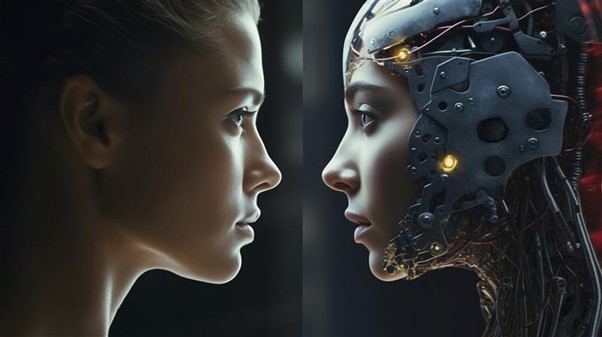
Over the past few years, motion design has entered a period of rapid acceleration. Artificial intelligence tools can now generate animations, transitions, and even entire explainer videos in minutes. For many organizations, this speed is deeply appealing. Marketing teams face relentless content demands, shrinking timelines, and increasing pressure to do more with fewer resources. In this environment, AI-driven motion design appears to offer an obvious solution: faster output, lower costs, and near-instant iteration.
Yet alongside this promise, a quieter concern has emerged. As AI-generated motion content becomes more widespread, much of it begins to look and feel the same. Subtlety disappears, emotional tone flattens, and brand differentiation weakens. Audiences may not always articulate what feels off, but they sense it. The central pain point facing motion design in 2026 is no longer whether AI can produce motion graphics, but whether it can produce motion graphics that feel intentional, distinctive, and human.
The tension between automation and artistry defines one of the most important creative questions of the moment. Rather than choosing between AI and human designers, leading studios and brands are increasingly focused on finding the sweet spot where technology enhances craft without replacing it.
The urgency of this debate is rooted in both technological progress and audience behavior. AI tools for design and animation have improved rapidly, driven by advances in generative models and procedural automation. According to McKinsey’s research on generative AI, creative and marketing functions are among the most immediately impacted domains, with significant productivity gains already being realized. Motion design, in particular, benefits from AI’s ability to automate repetitive tasks such as keyframing, layout adaptation, and versioning.
At the same time, audience expectations have evolved. Digital platforms have trained viewers to recognize patterns quickly. When visual language becomes too predictable, engagement drops. Research from the Ehrenberg-Bass Institute emphasizes that distinctiveness is a key driver of brand memory and long-term effectiveness. If motion design becomes overly standardized due to widespread AI use, it risks undermining one of its core purposes: differentiation.
There is also a cognitive dimension. Studies in human–computer interaction show that people respond more strongly to content that reflects human intentionality, particularly in narrative and emotional contexts. While AI excels at optimization and speed, it does not possess lived experience, cultural intuition, or emotional judgment. As a result, purely AI-generated motion design often performs well functionally but struggles to convey nuance, humor, or emotional resonance.
This is why the AI vs. human motion design question has become central in 2026. The issue is not capability, but balance. Organizations that rely exclusively on AI risk visual sameness. Those that reject AI entirely risk inefficiency and slower response to market demands.

Finding the sweet spot between AI and human motion design begins with role clarity. AI performs best when it is used as an assistive tool rather than a creative authority. Tasks that are repetitive, rule-based, or scale-dependent are ideal candidates for automation. These include resizing assets for multiple platforms, generating motion variations from a defined style system, automating transitions, and accelerating early-stage prototyping.
Human designers, by contrast, are essential at the stages where meaning is defined rather than executed. Concept development, narrative structure, visual metaphor, timing for emotional impact, and brand-specific style decisions all require human judgment. These are not merely aesthetic choices; they are strategic ones that shape how audiences perceive credibility, trust, and identity.
A practical workflow increasingly adopted by leading studios involves human-led creative direction supported by AI-assisted execution. Designers establish the visual language, motion principles, pacing, and emotional intent. AI tools are then used to extend, adapt, and optimize that vision across formats and use cases. This approach preserves authorship while gaining efficiency.
Iterative feedback loops are also critical. AI-generated outputs should be treated as drafts rather than final products. Human designers refine motion curves, adjust timing, and correct visual emphasis, ensuring that the final result aligns with narrative and brand goals. In this model, AI accelerates the process, but humans remain responsible for quality.
A recent motion design project delivered by All in Motion demonstrates how this balance works in practice. The objective was to produce a visually distinctive animated brand sequence that could be adapted across multiple platforms and durations. Speed and scalability were important, but the brand required a high level of emotional tone and visual refinement.
The creative direction, storyboarding, and core animation principles were developed entirely by human designers, ensuring that the motion language reflected the brand’s personality and strategic positioning. AI-based tools were then used to assist with versioning, layout adaptation, and timing variations for different formats.
This hybrid approach allowed the project to scale efficiently without sacrificing originality or polish. The final outputs retained a handcrafted feel, while production timelines were significantly reduced. The result was motion design that felt intentional and expressive, rather than automated.
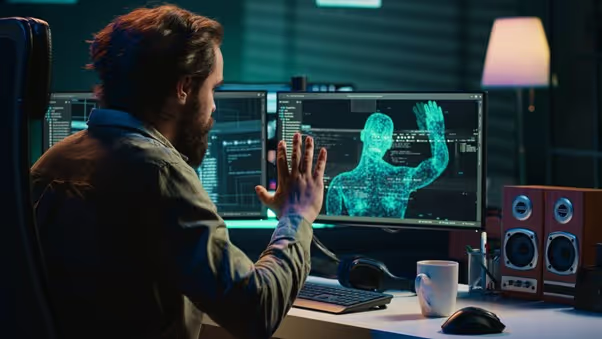
From a technical perspective, AI excels in areas that benefit from consistency and speed. Automated easing, physics-based simulations, and procedural motion generation can save substantial time when used within a clearly defined system. These tools are particularly effective for interface animations, data-driven motion graphics, and content that requires frequent updates.
However, resolution, timing, and sound integration remain areas where human oversight is critical. Motion design is not only visual; it is temporal. Micro-adjustments in timing can change how an animation feels, whether it appears confident, rushed, or hesitant. AI can approximate these decisions, but it cannot evaluate them in relation to brand tone or emotional intent.
Sound design further illustrates this limitation. Synchronizing motion with audio cues, musical phrasing, or voiceover rhythm requires interpretive judgment. Research from the BBC’s audience experience studies shows that poorly aligned audio-visual timing significantly reduces perceived quality and trust, even when viewers cannot explicitly identify the issue. Human designers remain essential for achieving this level of coherence.
Style is another decisive factor. AI systems tend to reinforce prevailing visual trends because they are trained on existing data. Without human intervention, this can lead to homogenization. Human designers counteract this by introducing deliberate asymmetry, unexpected transitions, or restrained pacing that distinguishes one brand from another.
The future of motion design is not a competition between artificial intelligence and human creativity. It is a negotiation. AI offers unprecedented speed and efficiency, while human designers provide judgment, emotion, and meaning. The highest-quality motion design in 2026 emerges where these strengths intersect.
Organizations that approach AI as a shortcut to replace creative expertise risk visual sameness and weakened brand identity. Those that integrate AI thoughtfully, under human creative direction, gain both efficiency and distinction. The sweet spot lies in using technology to amplify craft rather than erase it.
All in Motion approaches motion design with this balance at the core. By combining human-led creative strategy with carefully applied AI tools, the studio delivers motion work that is both scalable and expressive, efficient yet intentional. The result is motion design that supports brand identity, engages audiences, and stands apart in an increasingly automated landscape.
To explore how a balanced approach to AI and human motion design can elevate your brand’s visual storytelling, visit www.allinmotion.com and start the conversation.
We craft videos and visuals that connect, inspire, and resonate.
Let’s create something worth watching — and remembering.
hello@allinmotion.com