If you’ve ever wondered why some ads stop your scroll while others fade into digital noise, the answer isn’t in your product, your slogan, or your algorithm. It’s in your biology.
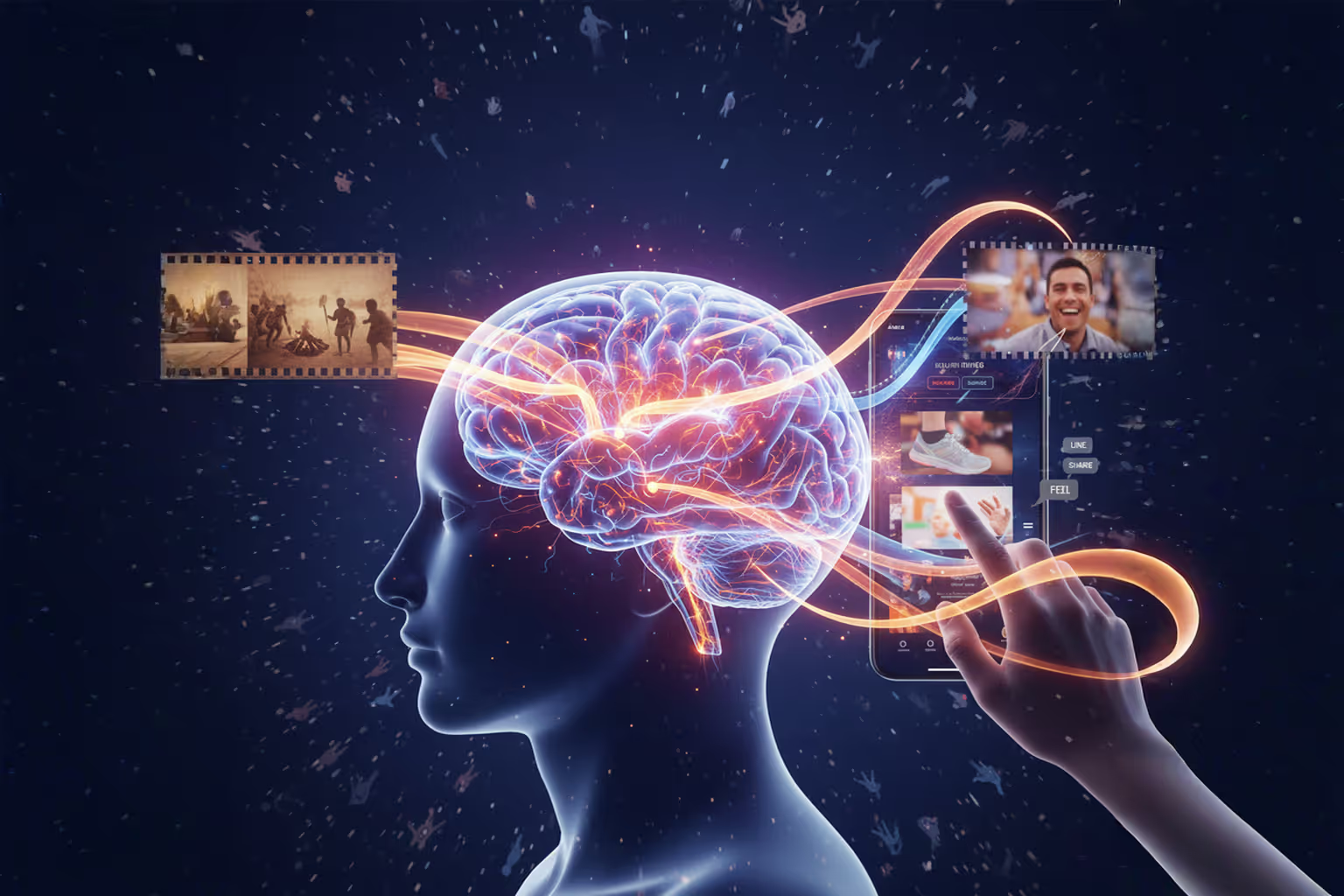
From cave fires to cinema screens to TikTok, humans have always been captivated by moving images. We can’t look away. We don’t choose to love video; we’re wired to. The secret lies deep in our evolutionary design, in the parts of the brain that notice motion, feel emotion, and mirror what we see.
And that, right there, is why video isn’t just another content format. It’s the mother of all media.
Why We’re Wired for Motion
Long before we became marketers or consumers, we were hunters, gatherers, and social creatures scanning the environment for movement, a flash of danger, a signal of opportunity. Our brains evolved to prioritize motion because it meant life or death. Even today, when pixels move on a screen, our midbrain lights up before we consciously realize it. Motion still commands attention.
That’s why video stops thumbs on a feed faster than text or static images ever can. The brain’s motion detectors fire instantly, drawing our focus. It’s primal, automatic, and unstoppable.
When you realize this, you stop thinking of video as content. You see it as the natural language of attention.
Video Feels Like Real Life
Humans don’t live in still frames. We live in a continuous, moving world. Video replicates that experience. It’s the closest medium to how we naturally perceive reality fluid, multisensory, dynamic.
That’s why people find video easier to process, remember, and believe. It feels authentic because it mirrors the real world. A photo tells a story. A video makes you live it.
For marketers, this means that video collapses the psychological distance between brand and audience. When viewers see your product move, your people speak, your world breathe, their brain treats it not as an ad, but as an experience.
Motion = Emotion
Emotion is the fuel of marketing. But emotion isn’t triggered by facts or text, it’s triggered by seeing and hearing humans in motion.
Expressions, tone, pacing, gestures these are all nonverbal emotional cues our brains decode instantly. When someone smiles, frowns, or gasps, your brain’s mirror neurons respond as if you are smiling, frowning, or gasping. That’s empathy in action and video is its perfect conduit.
When Nike shows an athlete breaking limits, or when a small brand shares an unfiltered founder story, the motion isn’t decorative, it’s emotional data. Your audience doesn’t just understand the story. They feel it.
And feelings drive memory, trust, and purchase intent.
It’s Easier on the Brain
Cognitive science calls it fluency, how effortlessly we can process information. The easier something feels to consume, the more we like it, trust it, and remember it.
Video is cognitively fluent because it uses multiple channels at once: sight, sound, and motion. It lets people absorb complex messages quickly, without effort. Text asks the audience to decode, video lets them experience.
This is why explainer videos outperform product pages, and why a 15-second reel can communicate a brand’s entire vibe faster than a 500-word article.
Culture Runs on Motion
From the first motion pictures to modern short-form platforms, culture has always bent toward the moving image. Every major medium evolution film, TV, YouTube, TikTok has been about motion meeting connection.
When people share, remix, and respond to video, they’re not just spreading content; they’re spreading feeling. That’s why the social graph loves video. Algorithms didn’t create this, human psychology did. The platforms simply exploit it.
For brand leaders, this means your choice isn’t whether to do video. It’s how to do it with intent, how to build consistent, emotionally intelligent, story-driven motion across your marketing ecosystem.
The Marketer’s Playbook: How to Use the Brain’s Design
Now that you understand why video works at the level of human design, here’s how to use it strategically.
Lead with Motion, Not Message
The first second of your video is a make-or-break moment. Movement in the frame should start instantly - a hand, a face, a shift, a reveal. Your audience’s attention system is tuned to notice change, not stillness.
Plan your opening frame for kinetic tension. Something has to move, even subtly to hook the primitive brain before the rational one checks out.
Show, Don’t Tell
If you can demonstrate it, don’t describe it. Video gives you the power to replace words with experiences.
Tell Micro-Stories
Humans remember stories, not specs. Even short-form videos (under 30 seconds) can follow the classic story arc: setup, tension, resolution.
Design for the Senses
The best videos engage sight, sound, and rhythm. Think of editing as choreography - each cut, beat, and transition guides emotion.
Build Continuity Across Touch points
Video shouldn’t live in isolation. It should extend your brand’s visual and emotional language across channels.
Optimize for Human Behaviour, Not Just Algorithms
Test how people feel when they watch your content, not just how long they watch. Emotional intensity, memory recall, and narrative clarity matter more than completion rates.
How to Build a Neuroscience-Based Video Strategy for Your Brand
You don’t need Hollywood budgets or viral luck to use these principles, you need human insight and creative intent.
Start with Emotional Mapping, Not a Script
Before you write a single line of dialogue or storyboard a frame, ask: What do we want people to feel?
Think in Sequences, Not One-Offs
One video won’t build a brand, momentum will. Design recurring formats, founder diaries, customer stories, brand rituals that let your audience anticipate what comes next.
Layer Your Formats Across the Funnel
Different video formats trigger different psychological responses. Use that to your advantage.
Use Authentic Faces and Real Voices
Humans connect with humans, not logos. Authenticity isn’t a trend, it’s neuroscience.
Design for Silent Impact
Over 80% of social video is watched on mute. That means your story has to work visually through movement, typography, and rhythm even without sound.
Test Emotion, Not Just Analytics
Views and watch time tell you what people did. Emotional metrics tell you what they felt and feeling drives behaviour.
Build an Always-On Video Mindset
The old model said: Let’s make one big brand film this quarter. The new model says; Let’s make motion part of everything we do.
The Final Frame
We’ve entered a new era where every brand is also a broadcaster. The human brain was built for motion and video is motion with meaning.
So, as you plan your next campaign, remember this: Don’t just make content. Make movement. Because when your brand moves, your audience moves with it.
If you want marketing that doesn’t just get views but creates visceral memory, anchor your strategy in the psychology of motion, emotion, and story. Video isn’t the future of marketing, it’s the oldest technology of human connection, finally meeting the modern tools to scale it.