Turn client stories into powerful sales assets with this testimonial video guide from All in Motion, your global B2B creative production partner.


From Our Blog
—
From Our Blog
—
From Our Blog
—
From Our Blog
—
From Our Blog
—
From Our Blog
—
Best Testimonial Video Maker: How to Turn Client Stories into Sales Assets

Share:

The testimonial video is back from the editing table. The lighting is good, the sound is clean, the pacing feels right. It ticks every box and is ready to go live. It goes up on YouTube. It gets shared on LinkedIn a couple of times. It receives a few likes, maybe a few comments too. Then it just sits there, forgotten, until someone from the team remembers it months later. All that effort put into making it, all for a few impressions and no extended use?
This happens because most teams are trying to make a good-looking video. What they’re missing is assessing whether this video can also be used effectively as a sales tool. That gap is why so many testimonial videos get made, get watched once, and never do any real work after that.
A testimonial video that "looks good" is a marketing outcome. A testimonial that gets used in a sales call, dropped into a deck, or sent to a prospect mid-negotiation is a business outcome. Getting from one to the other means rethinking the purpose before you ever pick up the best testimonial video maker or camera you’ve got.
What Separates a Sales-Ready Testimonial From a Generic One
Most testimonial videos are built to showcase what an existing client thinks about the partnership. That sounds reasonable until you think about who's actually watching it later. It's not the existing client anymore, it’s a prospective client. And that person doesn't only care about the nice things your existing client has to say about you. They care whether your offering will help solve their specific problem.
This is where generic testimonials miss the mark. They stay warm and vague because vague is safe. "Great team to work with." "They really understood our needs." "The results speak for themselves." None of this tells a prospective client anything they can actually use to make a decision. It's merely praise, not proof of capabilities.
A sales-ready testimonial names the actual problem in addition to the praise. Not "we needed better marketing," but the specific moment things weren't working. That specificity is what makes a prospect lean in.
Here's what the difference can actually look like:
▪️Generic: "Working with the team was a great experience and we saw strong results."
▪️Sales-ready: "We'd tried two vendors before this and both times we were still finding out about outages from customer complaints, not from our own systems. Within the first month here, we could see exactly where the grid was failing before a single customer called in."
The specificity of the second one is the creative lever an effective testimonial video needs in addition to good visuals and pacing. A prospect watching that second line play out can relate to it, and they can recognize their own set of issues that need solving. The problem-solution angle can prove to be a lot more persuasive than vaguely stating a job was done well.
This also means sales need to have some stake in the content of the video, not just marketing. They need to give a clear picture of what doubts come up most in deals that stall. The interview needs to be built in a way that clears those doubts through the answers. Once that is achieved, the video becomes one a sales rep can actually pull up to show proof of concept.
A Repeatable Interview and Shoot Process That Reduces Client Friction

Once you know what a testimonial video needs to do, the next problem is making them without reinventing the process every single time. This is where most teams either burn out trying to make each video feel special, or they go the opposite way and every video looks and sounds identical.
The way out of this is having a consistent skeleton with an fluid surface. The structure behind every shoot stays the same. What shows up on screen doesn't have to. The skeleton includes things like a short pre-interview brief so the interviewee isn't caught off guard, a fixed set of questions thoughtfully crafted to avoid one-word or overly polished answers, and a clear call on whether the shoot happens remotely or in person. None of this changes video to video. What changes is the interviewee's personality and their specific story.
This matters for two reasons. First, it makes approvals faster. When all stakeholders know roughly what to expect going in, when they've been briefed in advance, they're far less likely to push back later on the editing or the final cut stage. Second, it makes the output faster. You're not solving a new production problem every time.
The way the questions are designed matters a lot too. "Tell us about your experience" invites a vague, rehearsed answer. "Walk us through the moment you almost didn't move forward with us" invites a real one. Getting a client to a specific memory is most of the work; however, it creates the difference between a generic video and a standout one.
One Shoot, Many Cuts: Distributing Across Sales Enablement, ABM, and Web
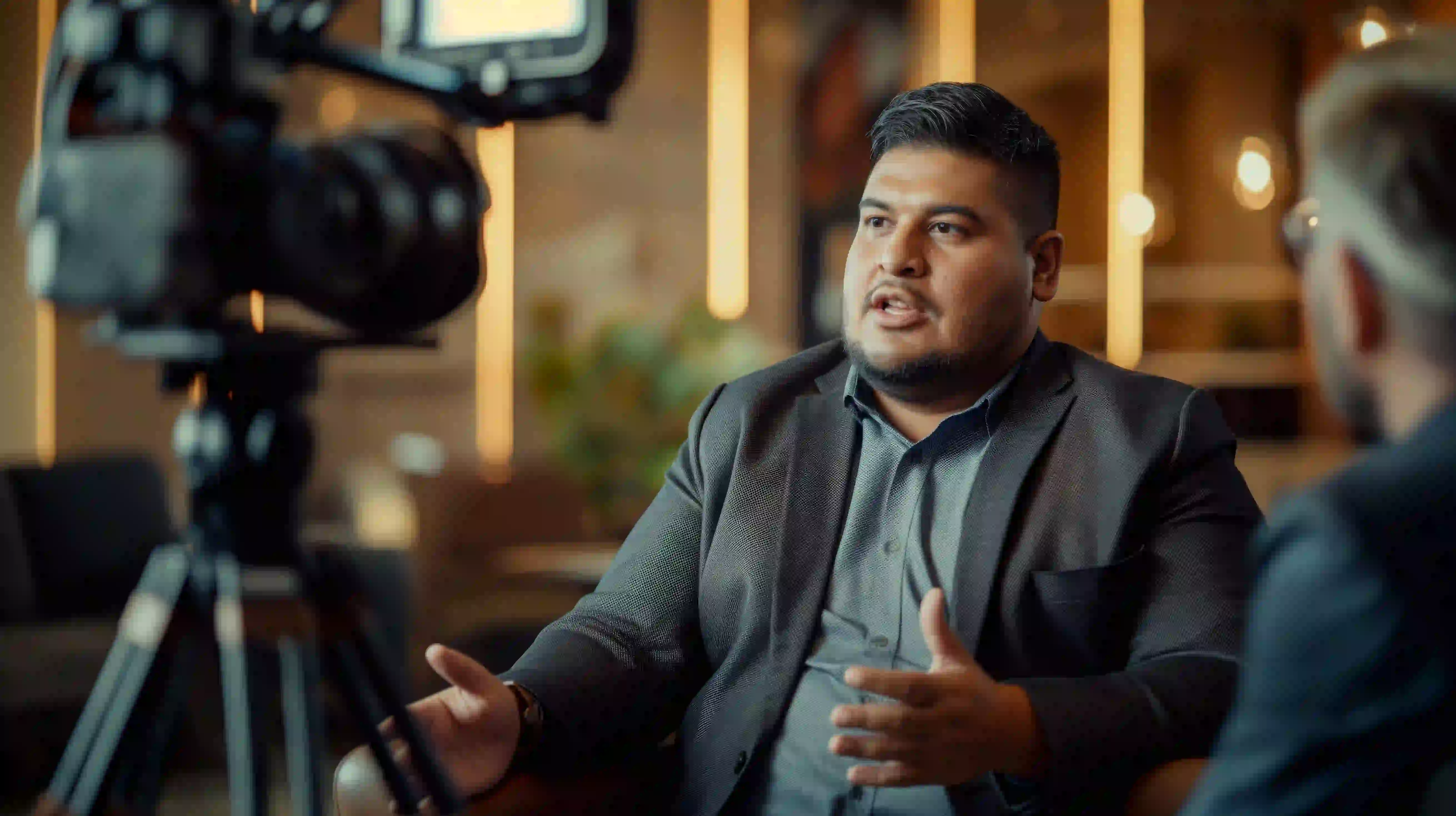
A testimonial video that's hosted only as one long video on one platform is already underutilized and probably also underperforming. The fix though isn't simply posting the same exact cut on multiple platforms, it's planning different cuts to suit the moment and channel where it's going to be showcased.
For sales enablement, that means short, specific cuts built around individual problem statements. Not a two-minute video, but a 15-30 second clip that directly answers "how long did it take to see results" or "what happens if the rollout doesn't go smoothly," so a rep can drop it into a call at the exact moment that question comes up.
For ABM, it means going narrower still. A personalized cut that leads with the part of the testimonial closest to that account's known pain point lands more impactfully than a general version ever could. This doesn't require reshooting anything. It just means editing with that account in mind from footage you already have.
For web, the long-form cut still has a place, but not as a standalone testimonials page nobody visits. It works better embedded directly into a case study, a landing page, or a pricing page where someone is already close to a decision and looking for that last bit of assurance.
The point isn't posting one video across multiple channels. It's treating one testimonial video as raw material for achieving multiple targets, each built for the exact moment someone needs it.
Additional Technical Tips to Keep in Mind
Keep it short. Most testimonial cuts that actually get reused in sales conversations run somewhere between 45 seconds and 2 minutes. Long enough to say something real, short enough to hold attention.
Prioritize audio over visuals. A slightly soft shot with clean, clear sound will always outperform a beautifully lit video where the client's words are hard to follow.
Shoot for both portrait and landscape. A testimonial that only exists in one aspect ratio limits where it can actually go.
Subtitles are a must. A large share of these videos get watched on mute, so if the story only works with sound on, it's not going to get watched all the way through.
Keep the branding light. A logo in the corner is fine. A heavily branded template around every frame starts to feel like an ad, and the entire point of a testimonial is that it doesn't feel like one.
Bringing It Together
The video that checks every box and still gets watched once isn't a failure of quality. It simply means the video was made to look good, without careful thought being given to how it should be used.
A testimonial built as a sales asset is built around a specific problem, not a general compliment. It comes from a process repeatable enough to scale but flexible enough to still feel real. Get that right, and the testimonial video stops being something you post once and forget. It becomes something your sales team actually reaches for.
Ready to turn your client stories into something your sales team actually uses? Book a call with All in Motion.