Reading Time:
5 min
Explain the invisible. How 3D animation transform complex biotech research into clear, high-impact visuals that drive clinical adoption and secure investor trust.


Explain the invisible. How 3D animation transform complex biotech research into clear, high-impact visuals that drive clinical adoption and secure investor trust.
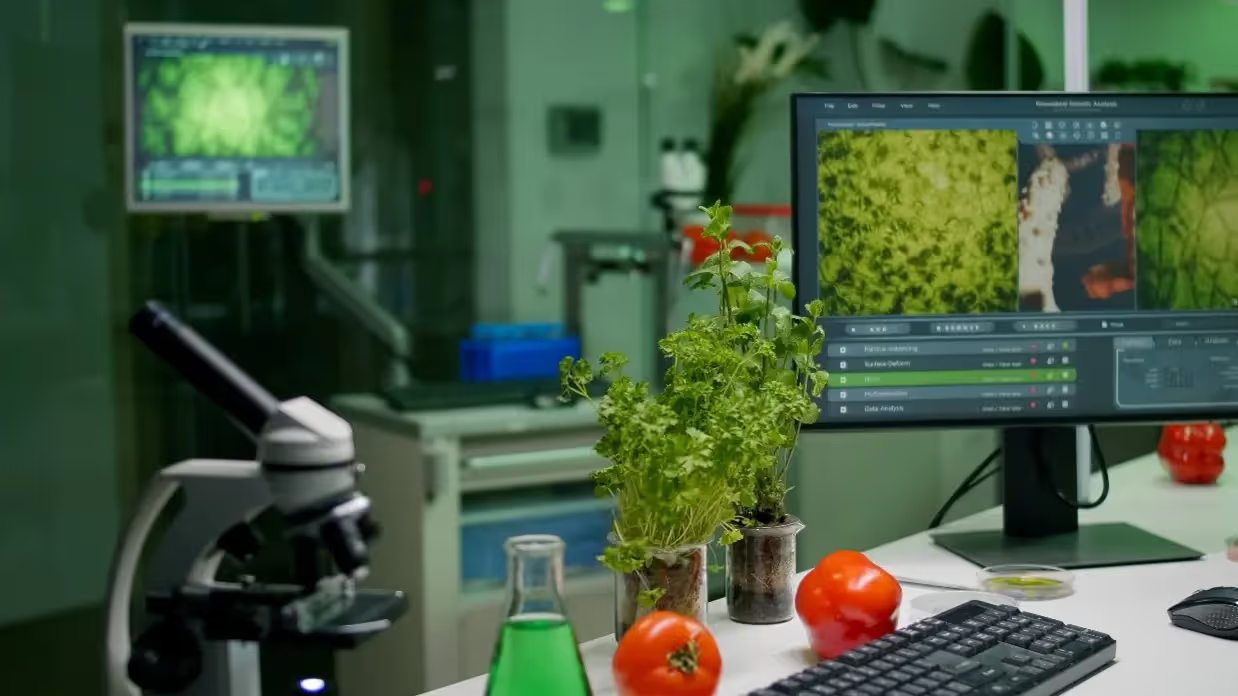
Health and biotechnology are among the most complex fields to communicate. The science happens at microscopic levels, inside organs, cells, and molecular systems that cannot be filmed with traditional cameras. Yet HealthTech brands are expected to explain these processes clearly to patients, clinicians, investors, and regulators alike. When explanations fall short, confusion can lead to mistrust, misuse, or slow adoption of otherwise powerful innovations.
3D animation has become one of the most effective tools for bridging this communication gap. By visualizing the invisible, HealthTech companies can explain how their technologies work with clarity, precision, and credibility. More than a marketing asset, 3D animation is now a core part of education, training, and compliance in the biotech and healthcare ecosystem.

Live-action video excels at capturing real-world environments, but it has strict limitations in healthcare communication. Cameras cannot easily access the interior of the human body, let alone capture molecular interactions, cellular behavior, or biochemical reactions. Even advanced imaging technologies, such as MRI or microscopy, often produce visuals that are difficult for non-experts to interpret.
As a result, HealthTech brands relying solely on live-action footage often resort to abstract explanations or static diagrams. These approaches can feel disconnected from reality, especially when audiences are asked to understand how a drug targets specific receptors or how a device interacts with tissue at a microscopic level.
3D animation removes these constraints. It allows creators to reconstruct the human body digitally, zoom seamlessly from organ-level views down to cells and molecules, and show processes unfolding over time. Instead of telling audiences what happens, animation shows them how it happens. This shift from description to demonstration dramatically improves comprehension.
For emerging biotech companies, this capability is especially important. When a product is novel, there are no familiar reference points. 3D animation helps establish those reference points visually, making innovation feel tangible rather than theoretical.
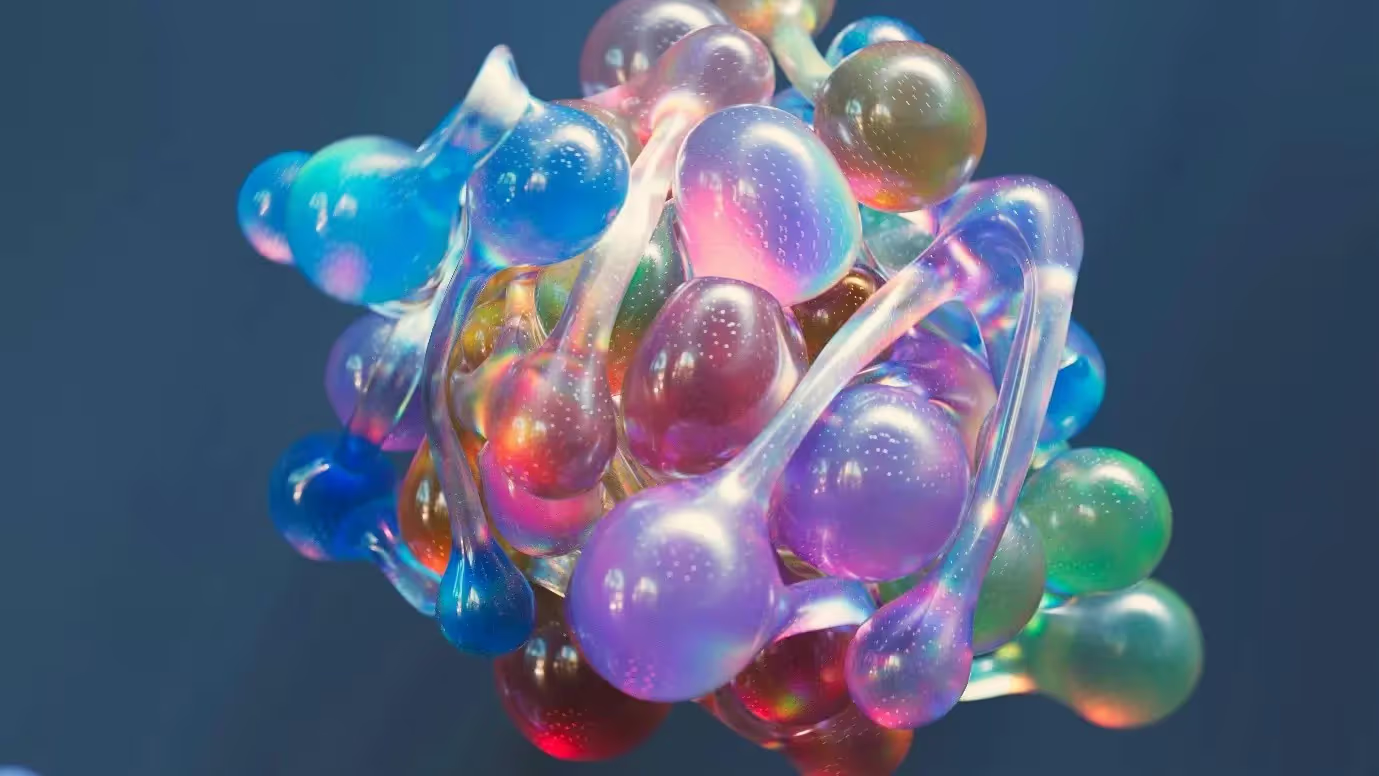
One of the most powerful uses of 3D animation in HealthTech is molecular visualization. Many biotech products operate at the level of proteins, enzymes, DNA, or receptors. These interactions are foundational to understanding efficacy, differentiation, and safety, yet they are also among the hardest concepts to explain in plain language.
Through 3D animation, molecules can be modeled accurately and animated to show binding, inhibition, replication, or signaling pathways. Viewers can see how a drug attaches to a target, how a mutation alters behavior, or how a therapy intervenes in a disease process. These visuals turn abstract mechanisms into observable events.
For investor and partner communications, molecular animations help establish scientific credibility. They demonstrate that the company understands its own technology deeply and can explain it clearly. For educational contexts, they support learning by aligning visual cues with verbal explanations, reinforcing retention.
Accuracy is critical here. Effective molecular animations are developed in close collaboration with scientific experts to ensure that scale, movement, and interactions reflect real biological behavior. When done correctly, these visuals do not oversimplify science; they make it accessible without distorting meaning.
Beyond external communication, 3D animation plays a vital role in patient education and professional training. Patients are increasingly expected to make informed decisions about treatments, procedures, and devices. However, medical explanations delivered verbally or through text can be overwhelming, especially in stressful situations.
3D animated videos help patients understand what will happen to their bodies before, during, and after a procedure. By visualizing steps clearly and calmly, animation reduces anxiety and improves informed consent. Patients who understand their treatment are more likely to follow instructions, adhere to protocols, and feel confident in their care.
For clinicians and surgeons, 3D animation supports training and standardization. Surgical techniques, device placement, and procedural workflows can be demonstrated consistently across teams and locations. Unlike live demonstrations, animated training materials are repeatable, scalable, and easily updated as techniques evolve.
In medical device companies, these animations often serve multiple purposes simultaneously: internal training, sales enablement, and clinical education. A single well-designed 3D animation can be adapted for different audiences by adjusting narration depth and emphasis.
Healthcare communication operates under strict regulatory and ethical expectations. Visual content must be accurate, balanced, and compliant with industry guidelines. Misleading or exaggerated visuals can have serious consequences, from regulatory scrutiny to loss of credibility.
3D animation supports compliance when developed with care. By controlling every visual element, creators can ensure that claims are aligned with approved data and that limitations are clearly represented. Animations can highlight what is known, what is measured, and what remains variable, supporting transparent communication.
Consistency is another advantage. Unlike live-action footage, which can vary based on conditions and interpretation, animation delivers the same message every time. This consistency is particularly valuable for global HealthTech brands operating across different markets and regulatory environments.
Trust is built not only through scientific accuracy but also through visual tone. Clean design, realistic motion, and professional execution signal seriousness and responsibility. In healthcare, these signals matter. Audiences are more likely to trust information that looks as carefully constructed as the science behind it.
As biotechnology advances, the gap between scientific complexity and audience understanding continues to grow. HealthTech brands that fail to communicate clearly risk slowing adoption, misunderstanding their own value, or alienating key stakeholders.
3D animation offers a solution that is both precise and human-centered. It allows companies to visualize the invisible, explain the complex, and educate diverse audiences without sacrificing accuracy. From molecular mechanisms to surgical workflows, animation turns expertise into understanding.
In a field where clarity can impact outcomes, 3D animation is no longer optional. It is a foundational communication tool that helps HealthTech innovations be seen, understood, and trusted.
We craft videos and visuals that connect, inspire, and resonate.
Let’s create something worth watching — and remembering.