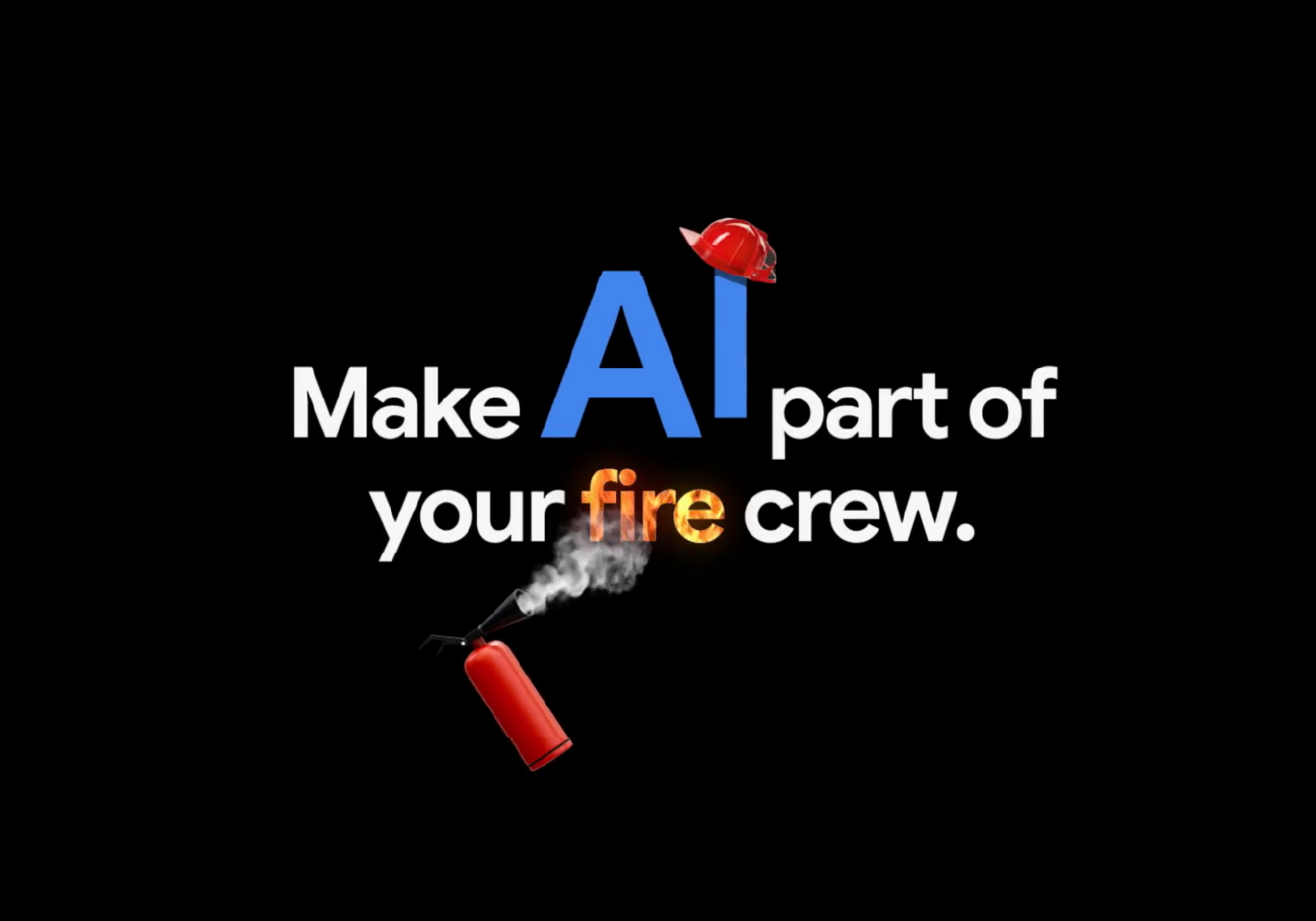
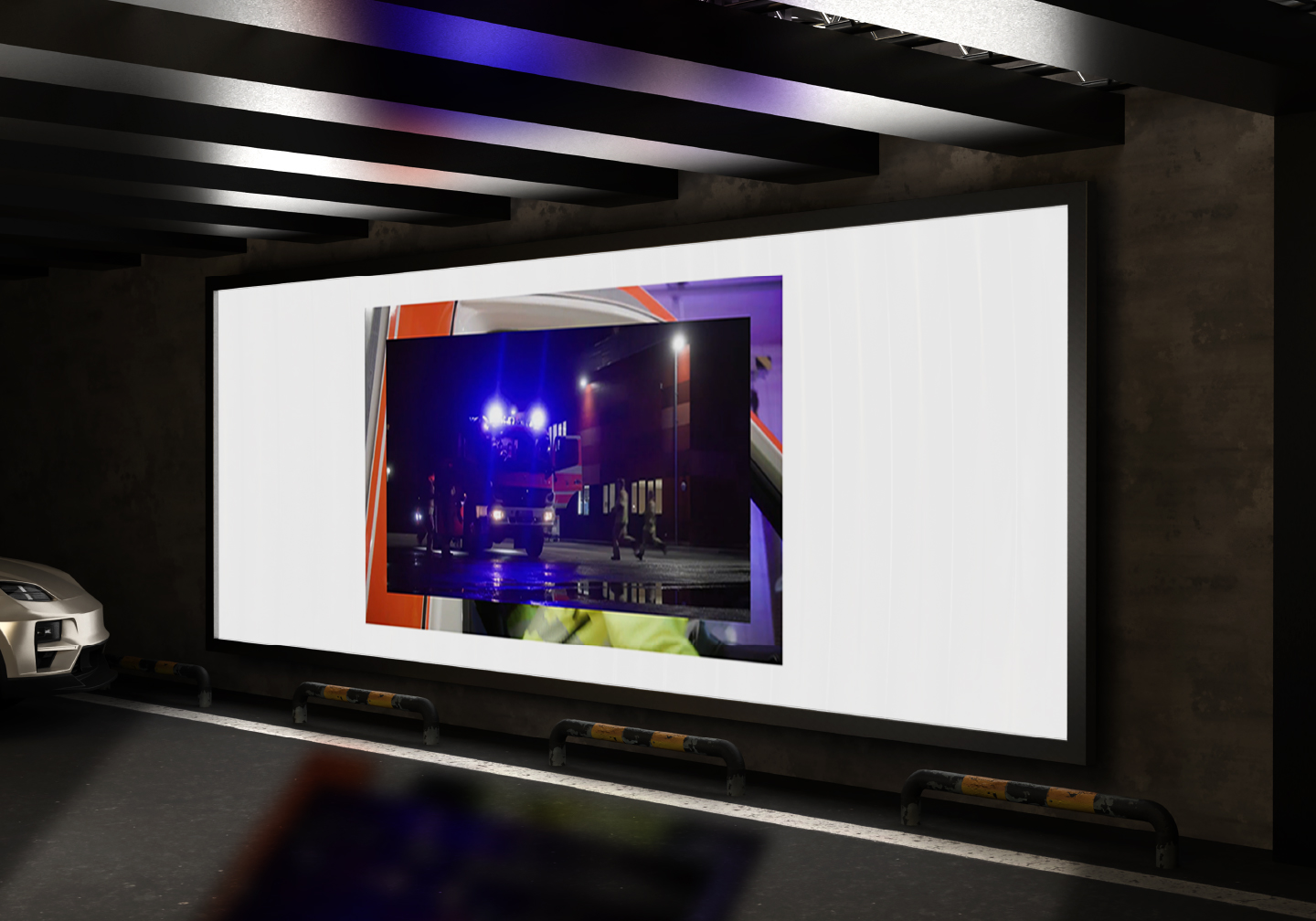
Eight minutes to the fire. Powered by Google Cloud.
Project:
Public Sector Client Case Study Films
Platform:
Six 10-Second Social Films
Client:
Google Cloud
Translating Google Cloud’s public sector impact into a series of high-velocity proof points, built for the decision-makers with the most to gain and the least time to spare.
Executive Summary:
Google Cloud’s public sector partnerships were delivering measurable operational outcomes, including a 30% reduction in emergency response times for the Düsseldorf Fire Department. The challenge was communicating that impact to a time-constrained, ROI-focused audience in ten seconds. We developed a structured question-answer framework that converted complex capability into undeniable proof points, deployed across six films spanning Germany, Italy, and France.
This engagement was delivered through our CORE™ framework - Consultative, Optimized, Reliable, Enterprise-Grade.
CONSULT & DEFINE
Public sector organisations across Europe are under sustained pressure to improve service delivery, reduce operational costs, and demonstrate measurable outcomes to their stakeholders. Google Cloud had been working directly with these organisations to address exactly those challenges — but the evidence of that impact was not reaching the decision-makers best positioned to act on it.
Our strategic consultation identified the gap precisely: the problem was not the absence of results, it was the absence of a communication framework capable of making those results land with a sceptical, evidence-driven audience in the time available.
The brief was to close that gap. Six ten-second films, each built around a specific client outcome, designed to reach public sector decision-makers across Germany, Italy, France, and beyond, not as product demonstrations, but as evidence-based proof of operational impact. The format was non-negotiable. Ten seconds. Social-first. No room for context, qualification, or explanation. Only outcomes.
OUTLINE & ARCHITECT
Public sector decision-makers evaluate technology on the basis of precedent, not promise.
The opportunity was therefore not to explain what Google Cloud can do. It was to demonstrate what Google Cloud has already done, and to make that demonstration specific enough to be credible and immediate enough to be actionable.
The creative framework was built around a single structural principle: lead with a question that creates organisational tension, resolve it with a verified outcome. For the Düsseldorf Fire Department film, that meant opening with “Can AI cut response times by over 30%?” - a question with direct relevance to any public sector organisation responsible for emergency service delivery and resolving it with a precise, verified operational result: on scene in under eight minutes, powered by Google Cloud.
This structure served a dual strategic purpose. It positioned the audience’s own operational challenge as the starting point, ensuring immediate relevance. And it positioned Google Cloud not as the subject of the communication, but as the answer to a question the audience was already asking. The same framework was applied consistently across all six films.
REALIZE & REFINE
The primary production challenge was sourcing specifically and identifying footage that met both the visual and legal requirements the format demanded.
Each film required location-specific imagery capable of establishing credibility and context within the first two seconds. Stock footage was the only operationally viable option, but a substantial proportion of available footage for these locations carried editorial-only licensing, rendering it unusable for commercial deployment.
Identifying footage that was simultaneously location-specific, visually credible, and commercially cleared, across multiple European jurisdictions, required extensive sourcing research and multiple procurement rounds. The operational complexity of this process is entirely invisible in the final films, which is precisely the standard the format required.
ENGAGE & EVALUATE
One fire department. One question. An answer that arrived in under eight minutes.
The Düsseldorf film reduced a complex public sector technology deployment to two numbers, a 30% improvement in emergency response times and an on-scene target of under eight minutes, that carry immediate operational meaning for any public sector decision-maker responsible for emergency service delivery.
Across six films, the series established Google Cloud’s credibility in the European public sector not through capability claims, but through verified operational outcomes. For an audience that evaluates technology vendors on the basis of evidence, that distinction represents a significant and measurable strategic advantage.